
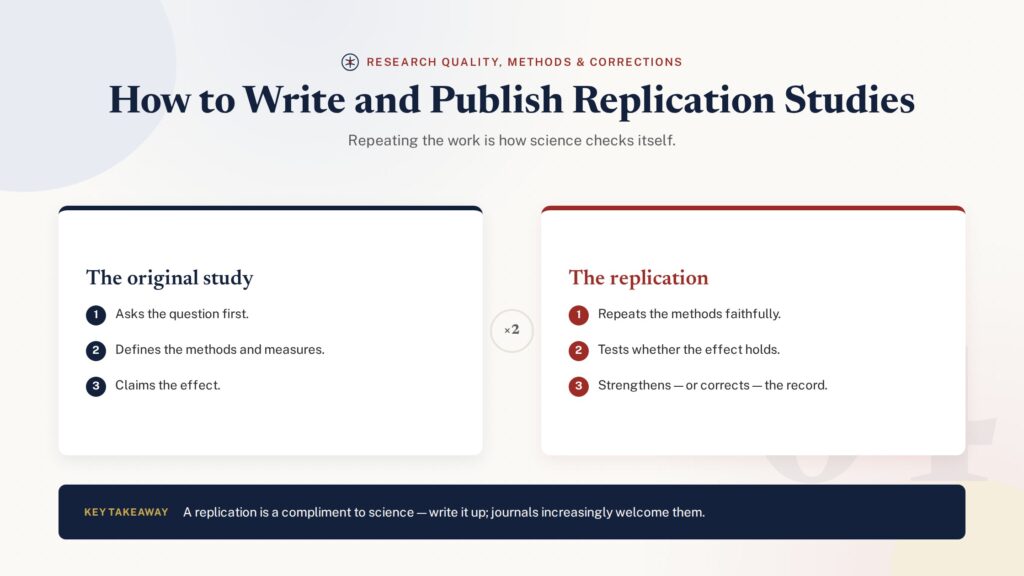
How to Write and Publish Replication Studies
Reading time - 7 minutes
Introduction
Replication studies test the reliability of published findings. Once undervalued, they are now central to improving research credibility.
This article explains how to design, write, and publish replication studies effectively.
Types of Replication
- Direct replication
- Conceptual replication
Both serve different scientific purposes.
Structuring a Replication Study
Key elements include:
- Clear reference to original study
- Transparent methodology
- Comparison of outcomes
Journal Options for Replication Studies
Many journals now:
- Accept replications
- Offer registered report formats
- Support reproducibility initiatives
Conclusion
Replication studies strengthen science by confirming—or challenging—existing knowledge. Clear reporting and methodological rigor are essential for successful publication.
Related Posts:
- Registered Reports Explained: A New Model in Academic Publishing
- Registered Replication Reports in Academic Publishing:…
- Breaking Down the "Preprint Hierarchy": Can Anyone Become a…
- The Role of Registered Data Auditors in Academic Publishing:…
- Managing References Efficiently: A Complete Guide to Reference…