
Journal Acceptance Rates Explained for Researchers
Reading time - 7 minutes
Introduction
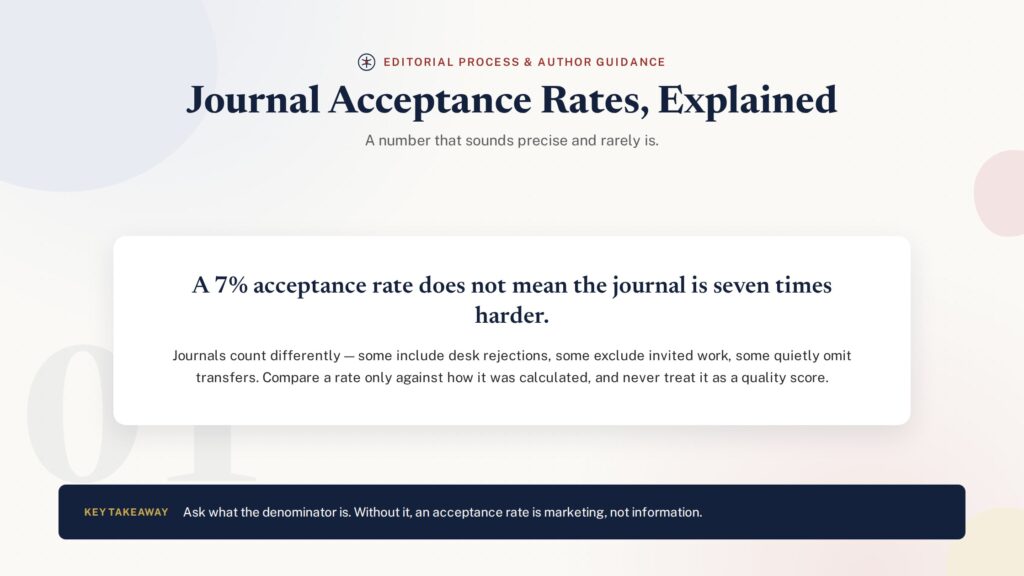
Acceptance rates are often cited as indicators of journal quality, but they can be misleading when taken at face value.
This article explains what acceptance rates actually indicate and how authors should interpret them responsibly.
What Are Acceptance Rates?
Acceptance rates reflect:
- The percentage of submitted manuscripts accepted
- Editorial selectivity, not article quality
They vary widely across disciplines.
Why Acceptance Rates Can Be Misleading
They do not account for:
- Desk rejections
- Revision rounds
- Submission quality
How Editors Use Acceptance Rates
Editors use them to:
- Manage submissions
- Maintain journal focus
How Authors Should Use Acceptance Rates
Authors should:
- Combine them with scope analysis
- Avoid prestige‑only targeting
Conclusion
Acceptance rates provide context, not guarantees. Strategic journal selection requires deeper evaluation.
Related Posts:
- Desk Rejection Explained: Top Reasons Journals Reject Papers Early
- Desk Rejection: Why It Happens and How to Avoid It
- Desk Rejection vs Peer Review Rejection: Key Differences Explained
- Understanding Desk Revision Requests from Journal Editors
- Journal Aims and Scope Explained: How to Align Your Research…