
Retractions, Corrections, and Expressions of Concern Explained
Reading time - 7 minutes
Introduction
Post‑publication updates are an essential part of maintaining the integrity of the scholarly record. Retractions, corrections, and expressions of concern serve different purposes but are often misunderstood by authors and readers.
This article explains what each term means, why they are issued, and how researchers should interpret them.
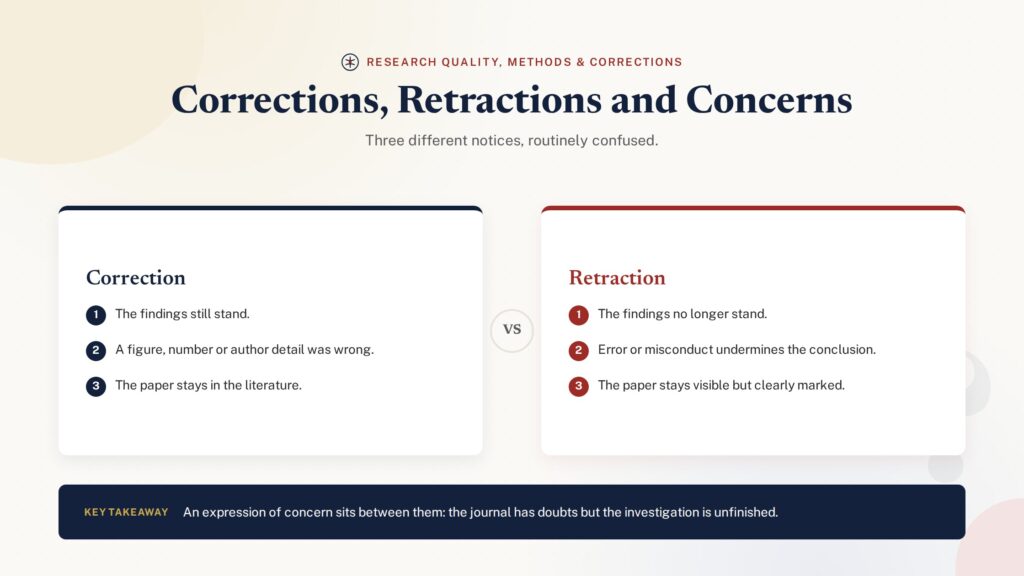
What Is a Retraction?
A retraction removes an article from the active scholarly record due to:
- Serious errors
- Misconduct
- Unreliable findings
Retractions aim to protect research integrity.
What Is a Correction?
Corrections address:
- Honest errors
- Minor inaccuracies
They preserve valid research while fixing mistakes.
What Is an Expression of Concern?
Expressions of concern:
- Signal unresolved issues
- Alert readers during investigations
They are temporary notices.
Impact on Authors and Literature
While stigmatized, post‑publication updates:
- Demonstrate transparency
- Protect the research record
Conclusion
Retractions, corrections, and expressions of concern are mechanisms for self‑correction in science. Understanding them helps researchers respond responsibly and maintain trust.