
Data and Code Sharing Best Practices in Research Publishing
Reading time - 7 minutes
Introduction
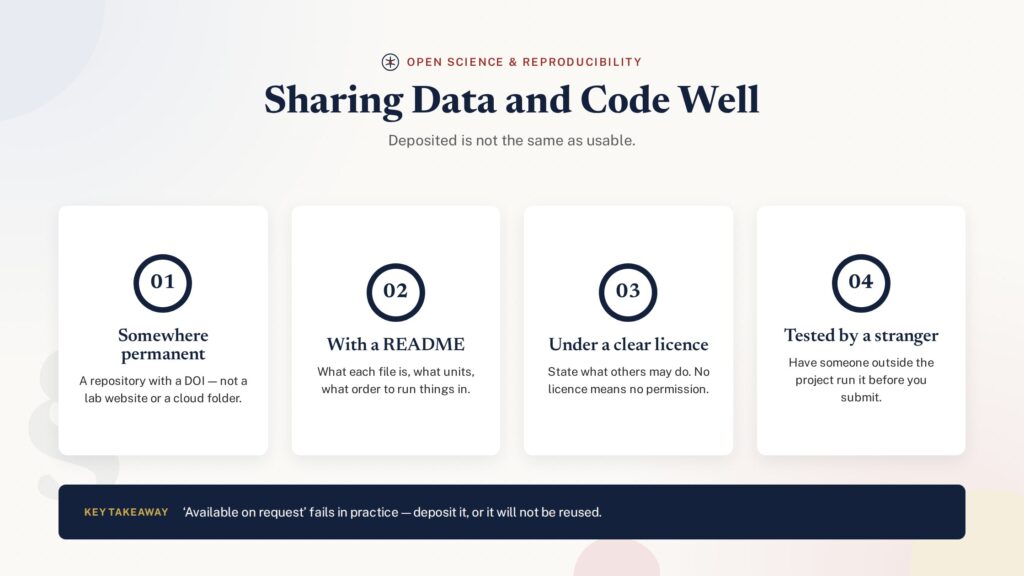
Sharing data and code is central to reproducible research. However, without proper preparation, sharing can create confusion, misuse, or ethical concerns.
This article outlines best practices for responsible data and code sharing that support transparency and reuse.
Why Data and Code Sharing Matter
They:
- Enable reproducibility
- Support verification
- Increase research impact
Preparing Data for Sharing
Best practices include:
- Clear documentation
- Ethical anonymization
- Standard formats
Sharing Code Responsibly
Code sharing should include:
- Version information
- Dependencies
- Usage instructions
Ethical and Legal Considerations
Researchers must address:
- Privacy
- Intellectual property
- Consent limitations
Conclusion
Responsible data and code sharing strengthens research credibility and supports cumulative science.
For the statement itself — what it must say, and why a bare GitHub link is rejected — see how to write a code availability statement.