
AI‑Generated Text in Academic Research: Ethics and Disclosure
Reading time - 7 minutes
Introduction
Artificial intelligence tools are increasingly used to assist academic writing, from language refinement to content structuring. While these tools can improve efficiency and clarity, they also raise important ethical questions about authorship, originality, and transparency.
This article explores how AI‑generated text should be used responsibly in research, what journals expect regarding disclosure, and best practices for ethical compliance.
What Is AI‑Generated Text?
AI‑generated text refers to content produced or assisted by:
- Language models
- Writing enhancement tools
- Automated summarization or paraphrasing systems
These tools assist writing but do not generate original scientific insight.
Ethical Concerns in AI‑Assisted Writing
Key ethical issues include:
- Misrepresentation of authorship
- Undisclosed AI assistance
- Risk of fabricated or inaccurate content
- Over‑reliance on automation
Ethics demand transparency and accountability.
Authorship and Responsibility
AI tools:
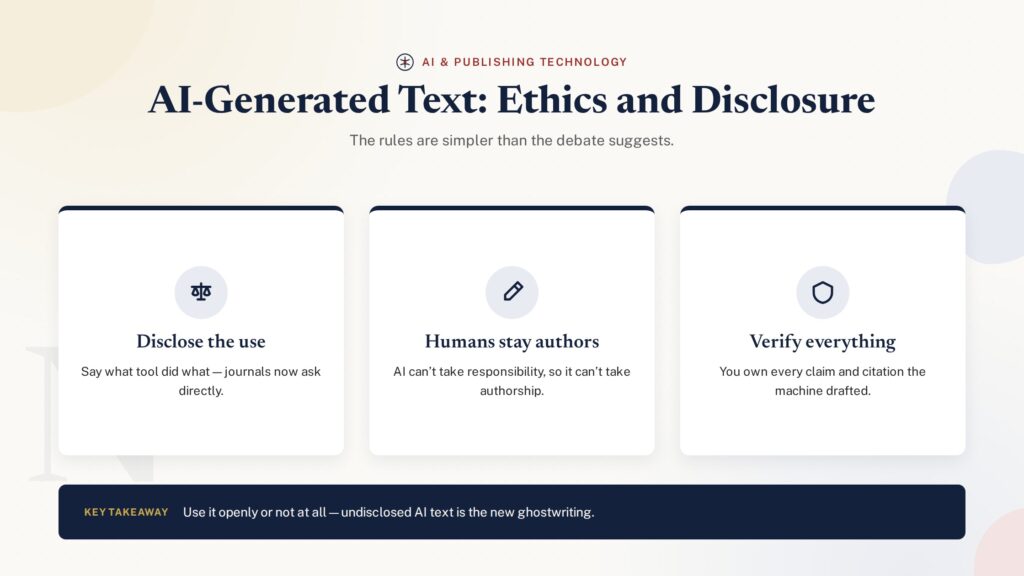
- Cannot be listed as authors
- Cannot take responsibility for content
Human authors remain fully accountable for accuracy, interpretation, and originality.
Disclosure Requirements in Journals
Many journals now require authors to:
- Disclose AI use in writing
- Specify how tools were used
- Confirm that AI did not generate data or results
Policies are evolving but transparency is essential.
Acceptable vs Unacceptable Uses of AI
Generally acceptable:
- Language polishing
- Grammar correction
- Structural suggestions
Generally unacceptable:
- Generating original scientific arguments
- Writing results or conclusions without oversight
- Fabricating citations or data
Responsible use supports—not replaces—scholarship.
Risks of Undisclosed AI Use
Failure to disclose can lead to:
- Manuscript rejection
- Retractions
- Ethical investigations
Disclosure protects authors and journals alike.
Best Practices for Ethical AI Use
Researchers should:
- Use AI as a support tool
- Verify all AI‑assisted text
- Disclose usage clearly
- Follow journal‑specific policies
Ethical use maintains trust in research.
Conclusion
AI‑generated text can enhance academic writing when used responsibly and transparently. By understanding ethical boundaries and disclosure expectations, researchers can benefit from AI tools without compromising integrity. Ethical AI use ensures that human scholarship remains at the center of research publishing.