
How to Respond to Conflicting Peer Reviewer Comments
Reading time - 7 minutes
Introduction
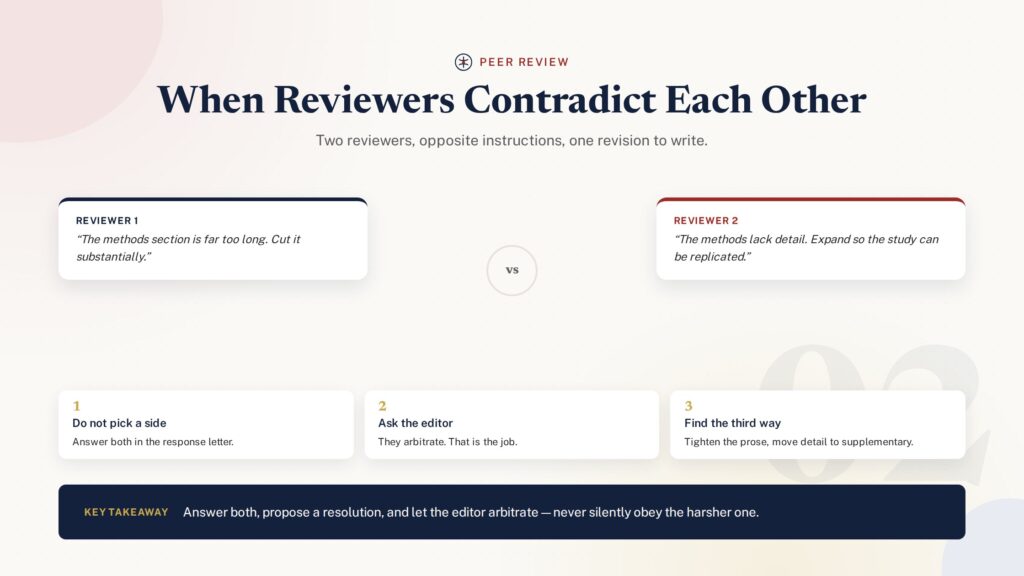
Conflicting reviewer comments are common and can confuse even experienced authors. Learning how to navigate contradictions is a key academic skill.
Why Reviewer Conflicts Occur
Reasons include:
- Different theoretical perspectives
- Methodological preferences
- Disciplinary norms
How Editors Expect Authors to Respond
Editors want:
- Clear explanations
- Balanced responses
- Evidence‑based decisions
Step‑by‑Step Response Strategy
- Identify conflicts
- Explain chosen approach
- Justify with evidence
- Communicate clearly to editor
Conclusion
Conflicting reviews are not a barrier to acceptance when handled thoughtfully. Clear, respectful responses help editors make informed decisions.
For the wider picture of what each decision means before you start drafting, see our guide to journal editorial decisions.